
Where is our home?

5th Sunday of Easter 3.5.2026
(1 Peter 2:4-9 , John 14:1-12)
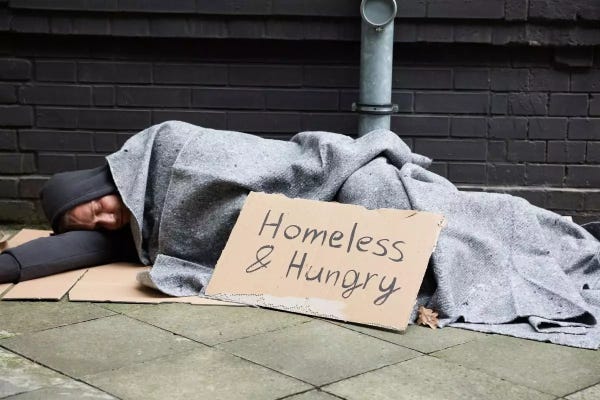
One of the cruellest losses we can suffer is to lose our home. In our time, millions of people are in this position, most of them not because of an unfortunate accident like a bushfire, but the result of racism and selfish attitudes among powerful people, who make cruel choices that benefit themselves but bring great harm to many others.
The Second World War was a vast tragedy, partly caused by financiers in USA and Britain funding Hitler and continuing to supply him with fuel. That war made millions of people homeless. They were known as displaced persons, DPs, and Australia benefited greatly by receiving a small fraction of their number.
Soon after that war many Jewish DPs began to arrive in Palestine. The United Nations gave them more than half of someone else’s homeland, then Israel’s Zionist government used selective massacres to drive more than 750,000 Palestinians from their homes. They were forced into Gaza and neighbouring countries, having no home but refugee camps. The same thing has been done to many people since then.
In Myanmar too, racial prejudice and massacres recently drove millions of Rohingya people into tent camps in Bangladesh. In several African countries, factional conflicts have done the same. The inhuman bombing of Gaza, Iran and Lebanon have further increased the number of the world’s homeless.
One of the deepest principles taught by the Jewish and Christian scriptures – the Bible - is that the mysterious God who made us is determined to bring justice to the weaker people who are cruelly oppressed by the more powerful: “The stone which the builders rejected has become the cornerstone” (Psalm 118:22, Mark 12:10, Matthew 21:42, Luke 20:17); “Blessed are the poor… the persecuted” (Matthew 5). This is the theme of today’s first reading from the Letter attributed to St Peter. Jesus is a symbol and a guarantee that it is happening, for he was destroyed for confronting the powerful but has shown that he has passed through death.
Today’s reading from the Gospel of John shows Jesus making the extraordinary promise that by his death and resurrection he is going to prepare a home for us. Such statements disprove the mistaken claim of some people that the New Testament is not about life after death, but solely about how to build God’s reign on earth here and now.
The first Christians described themselves, not as a church or institution but as The Way. When Jesus referred to himself by that same title, he was obviously speaking about the way to our final, eternal condition beyond death, promising the ultimate solution for every kind of homelessness. When Jesus mentioned “dwelling places”, he was obviously not talking about buildings or rooms but about us entering into the mystery of God, the Infinite Consciousness that sustains the universe.
Jesus in fact identifies himself with that Mystery in many statements such as “I am the bread of life… The light of the world…” These resemble the voice of God speaking from the burning bush: “I am Who I am” (Exodus 3). Jesus is unique, but when he claimed “I am The Way”, he was not comparing himself with other religious systems - for instance the rich Daoist philosophy of ancient China, also known as The Way. He was simply saying that if we follow him we will surely reach the Source of all Being, Meaning and Love. In other words, no one is finally homeless.
* * * * *